


UPI (Unified Payments Interface) in 2026 lets you send up to ₹1 lakh per day for regular payments — and up to ₹10 lakh for verified categories like tax, education and healthcare — instantly, 24×7, free of charge. With NPCI’s latest rules now in force, transaction speeds have been cut to around 15 seconds, balance checks are capped at 50 per day per app, and AutoPay mandates follow new execution windows. This guide explains everything that has changed and how to get the most out of UPI this year.
India’s homegrown payment system is no longer just a payment app feature — it is the backbone of the country’s daily economy. In May 2026, UPI processed a record 23.2 billion transactions worth ₹29.9 trillion in a single month, and 703 banks are now live on the network. Whether you use PhonePe, Google Pay, Paytm or BHIM, the rules below apply to you.
What Is UPI and How Does It Work?
UPI is a real-time payment system built by the National Payments Corporation of India (NPCI) that links your bank account to a virtual payment address (your UPI ID, like yourname@okhdfcbank). When you scan a QR code or enter a UPI ID and confirm with your UPI PIN, money moves directly from your bank account to the receiver’s account — no wallet top-ups, no card numbers, no waiting.
Three things make UPI different from older methods like NEFT or IMPS: it works round the clock including holidays, it is free for person-to-person payments, and a single app can operate multiple bank accounts.
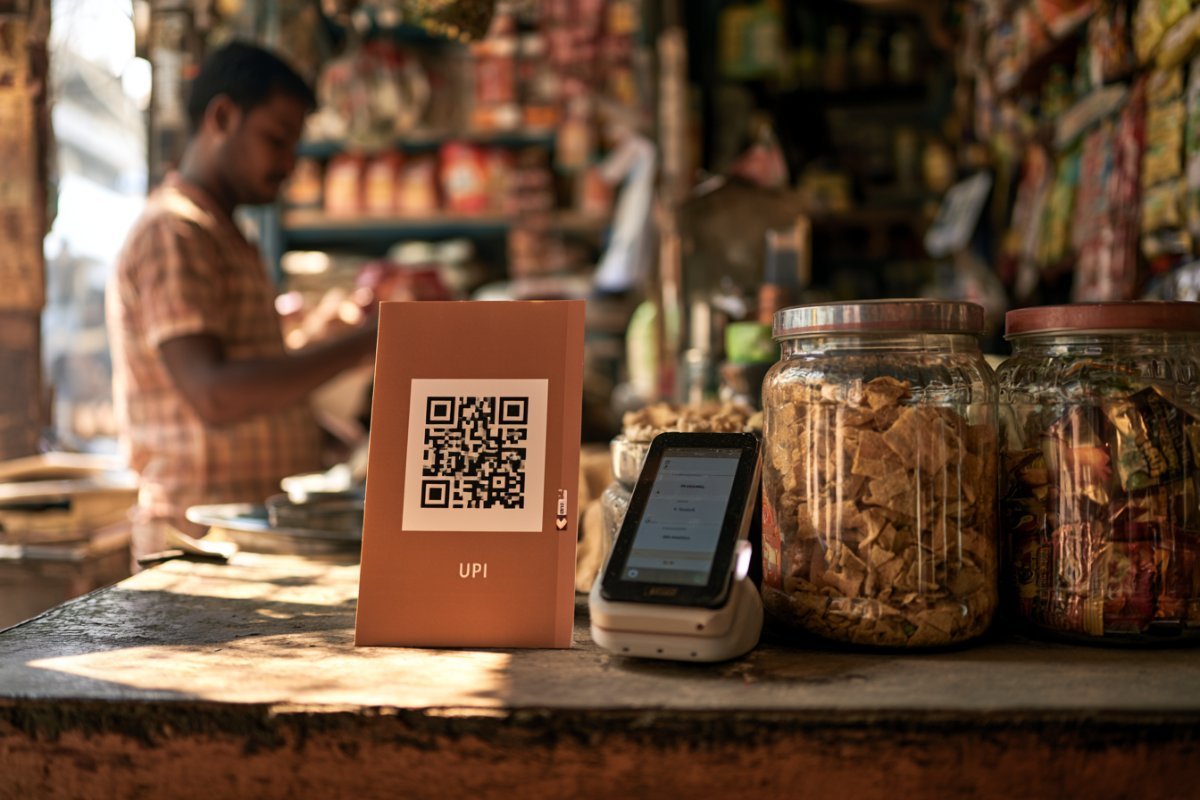
UPI Transaction Limits in 2026
The limits below are the NPCI network rules. Your own bank may set lower limits, so treat these as the ceiling.
| Transaction Type | Limit (2026) |
|---|---|
| Regular P2P (person to person) | ₹1 lakh per day |
| Regular P2M (person to merchant) | ₹1 lakh per day |
| Verified categories: tax payments, education fees, healthcare, capital markets | Up to ₹10 lakh per day |
| UPI AutoPay without PIN (standard subscriptions) | ₹15,000 per debit |
| UPI AutoPay without PIN (insurance, mutual fund SIPs, credit card bills) | Up to ₹1 lakh per debit |
| Balance checks | 50 per day per app |
If a payment fails even though you are within these limits, the cause is usually your bank’s own per-transaction cap or a temporary bank server issue — not UPI itself.
What Are the New UPI Rules in 2026?
NPCI’s recent circulars focus on making the network faster and more stable. Here is what actually changed for users:
1. Faster transactions — around 15 seconds
Transaction confirmation, status checks and reversals have been accelerated. Most payments now complete in near real time, and “pending” states resolve much faster than before.
2. Balance check and status request caps
Apps are limited to 50 balance checks per day per user, and repeated “check status” requests must respect enforced gaps. This stops apps from flooding bank servers — the main reason UPI used to slow down at month-end.
3. AutoPay runs in off-peak windows
Recurring debits (OTT subscriptions, SIPs, EMIs) are now processed in designated non-peak windows with a maximum of one original attempt plus three retries. Your subscriptions still get paid on the due date — just at network-friendly hours. Read our full UPI AutoPay guide for setup and cancellation steps.
4. Higher limits for verified categories
Paying income tax, college fees, hospital bills or IPO applications through UPI now supports up to ₹10 lakh per day, which previously forced people back to net banking.
Setting Up UPI for the First Time
If you are helping a family member get started, the process takes five minutes: install a UPI app (PhonePe, Google Pay, Paytm or BHIM), verify the mobile number that is registered with the bank (the SIM must be in the phone — this is how UPI binds your identity to your device), select your bank from the list, and let the app fetch your account. Finally, set your UPI PIN using your debit card’s last six digits and expiry date, or through Aadhaar-based OTP if your bank supports it — a change that has made UPI accessible to millions who never had a debit card.
Two setup tips that prevent future headaches: register the same mobile number with only one primary device to avoid verification loops, and note down which bank account is set as default — most “payment failed” complaints trace back to an old, low-balance account still set as the default debit account.
UPI Lite and UPI Circle: The Features Most People Ignore
UPI Lite is an on-device wallet for small payments: you load a balance from your bank account and pay merchants under ₹500 (up to ₹1,000 in some apps) without entering a PIN — faster at the counter, and it keeps dozens of chai-and-auto payments off your bank statement. The Lite balance limit is ₹5,000, and top-ups debit your bank account normally.
UPI Circle solves a different problem: paying on behalf of family members who do not have their own bank account or are not confident transacting alone. A primary user (you) links a secondary user (a parent, a teenager) who can then make payments with either full delegation (you set a monthly limit, they pay independently) or partial delegation (every payment comes to you for approval). For households managing money for elders, it is far safer than sharing your phone and PIN — which you should never do.
Is UPI Free? Charges Explained
For individuals, UPI remains free: P2P transfers and normal merchant payments from your bank account attract no charge. Two exceptions to know about: wallet-based (PPI) merchant payments above ₹2,000 carry an interchange fee paid by merchants (not you), and RuPay credit card payments on UPI follow credit card MDR rules for merchants. As a consumer, scanning and paying from your bank account costs nothing.
UPI Beyond India: Where It Works
UPI now works in 11 countries, including UAE, Singapore, France, Sri Lanka, Nepal and Mauritius. If you are travelling abroad, you can activate international payments inside your UPI app and pay by scanning local QR codes — we cover activation steps, charges and country-wise details in our guide to using UPI abroad in 2026.
How Safe Is UPI in 2026?
The technology is secure — every payment needs your device, your SIM and your UPI PIN. The real risk is social engineering: fake collect requests, QR scams and phishing calls caused the majority of the 6.32 lakh fraud cases reported in FY25. Two rules protect you from most scams: you never need to enter a PIN to receive money, and no bank ever asks for your PIN or OTP on a call. For scam patterns and the exact recovery process (helpline 1930), read our UPI fraud safety and recovery guide.
Getting the Most Out of UPI: Practical Tips
Set your daily limit lower than the maximum if you mostly make small payments — it caps the damage if your phone is compromised. Use UPI Lite for payments under ₹500 to skip PIN entry and keep your bank statement clean. Link a RuPay credit card to earn rewards on merchant payments you were making anyway. And if you run a shop or small business, see our UPI operating guide for small businesses for settlement, soundbox and record-keeping practices.
Common UPI Problems and Quick Fixes
“Payment pending” for long periods is now rare under the 15-second rule, but when it happens, do not retry immediately — wait for the status to resolve (the app polls automatically under the new status-check rules) and check your bank statement before paying again. “Bank server down” errors are bank-side, not UPI-side; if one account fails repeatedly, switch the paying account in the app. Money debited but not credited auto-reverses in minutes to a few days — raise an in-app dispute with the RRN if it does not. Registration failures almost always come down to the SIM not matching the bank-registered number, or SMS verification being blocked by a DND/low-balance prepaid SIM.
UPI in 2026: Key Numbers at a Glance
| Metric | Figure |
|---|---|
| Monthly transactions (May 2026) | 23.2 billion |
| Monthly value (May 2026) | ₹29.9 trillion |
| Banks live on UPI | 703 |
| FY 2025-26 total volume | 24,162 crore transactions (+30% YoY) |
| Top apps by share | PhonePe 46%, Google Pay 33%, Paytm 8% |
| Countries accepting UPI | 11 |
Frequently Asked Questions
What is the UPI transaction limit per day in 2026?
The standard limit is ₹1 lakh per day for both P2P and merchant payments. Verified categories such as tax payments, education fees, healthcare and capital markets support up to ₹10 lakh per day. Individual banks may set lower limits.
Are UPI payments charged in 2026?
No. Payments from your bank account — both P2P and to merchants — remain free for consumers. Interchange fees on wallet payments above ₹2,000 are paid by merchants, not users.
How many balance checks are allowed on UPI per day?
NPCI caps balance enquiries at 50 per day per app. If you hit the cap, check your balance through your bank’s own app or net banking instead.
Can I use UPI outside India?
Yes. UPI International works in 11 countries including UAE, Singapore, France, Nepal, Sri Lanka and Mauritius. You need to activate international payments in your UPI app, and forex charges of roughly 2–4% may apply.
What happens if a UPI payment fails but money is debited?
The amount is auto-reversed to your account, usually within minutes and at most within 3–5 working days. If it is not reversed, raise a dispute in your UPI app and then complain to your bank; escalate to the RBI Ombudsman after 30 days if unresolved.
The Bottom Line
UPI in 2026 is faster, more stable and more capable than ever — higher limits where they matter, subscriptions that manage themselves, credit on tap and acceptance in 11 countries. The rules changes are almost entirely invisible-but-beneficial for users. What still needs your attention is safety: keep your PIN private, question every collect request, and remember that receiving money never requires a PIN.

Techleez Editorial Team
The Techleez Editorial Team researches, writes and fact-checks every guide on this site. We focus on practical, India-first explainers — UPI and digital payments, government tech services like DigiLocker and Sanchar Saathi, telecom, smartphones and everyday AI tools. Every article is checked against official sources (RBI, TRAI, NPCI and service providers' own documentation) before publishing and reviewed again when rules change. Questions or corrections? Write to info@thetechleez.com — see our Editorial Policy for how we work.
More from this author →