

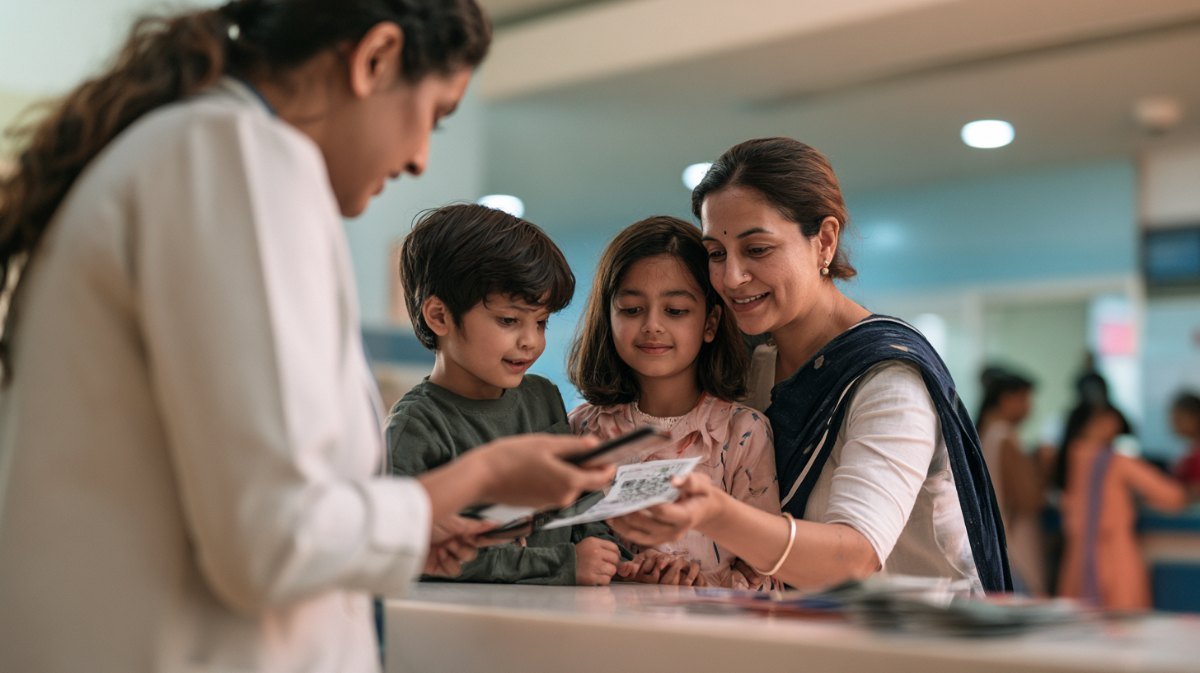
An Ayushman Bharat Health Account (ABHA) helps identify you within India’s digital-health ecosystem so that records can be linked and shared through participating systems. It is not, by itself, an insurance policy, a treatment entitlement or a complete medical history.
ABHA and an Ayushman insurance card are different
The Ministry of Health describes ABHA as a voluntary 14-digit health identifier. PM-JAY coverage and eligibility belong to a separate scheme. Do not assume that creating an ABHA number pays a hospital bill or makes you eligible for a particular benefit. Ask the hospital or scheme’s official help channel to confirm coverage separately.
An ABHA address is the readable identifier used in supported personal-health-record applications. When a facility asks for it, check which identifier the screen needs; do not substitute a bank, Aadhaar or insurance number.
Decide whether it will help you
ABHA can be useful when the hospitals or laboratories you use support record linking and sharing. The government’s ABHA explainer describes a system in which medical records remain with their originating providers and are exchanged through consent-based mechanisms. It does not mean that every old paper prescription automatically appears in one account.
Before relying on it for an appointment, ask the provider whether the relevant record is available digitally. Open the report and check its date, patient details and completeness. Keep your own copies of important reports, especially when changing providers.
Create or recover an account deliberately
- Start at the official ABHA portal or use an official app link from ABDM.
- If you think an account already exists, use the official recovery or sign-in options before creating another.
- Read the current identity-verification choices and consent. Use the route you can complete with your own records.
- Check the demographic details and identifiers before confirming.
- Save the account information securely and confirm that you can access it yourself.
ABHA creation is free. If a facility assists, ask what is being created and what information will be shared. An unexpected OTP is a reason to ask for an explanation, not proof by itself that a specific account is being created. Never disclose an OTP to an unverified caller.
Review each sharing request
The government’s security explanation says ABDM health-data exchange requires patient consent. Before approving, check the requesting provider, purpose, records and duration presented. Discuss missing history with your clinician so that a technical sharing decision does not unintentionally leave out information needed for care.
Consent controls reduce unnecessary disclosure, but they do not justify an absolute claim that misuse is impossible. Protect the phone and account, review available consent history and revoke access you no longer intend to grant. Revoking a permission is not the same as erasing every record already held by a hospital under its own retention obligations.
Understand registration and record linking
Supported QR-based registration can reduce repeated data entry at a participating facility. It does not guarantee that you skip every queue, obtain an appointment or receive every historical record. After a visit, check which prescriptions, results or discharge summaries are actually linked. Ask the facility to correct missing or wrong data rather than editing an official report yourself.
For account closure, read the current deactivate/delete explanation in the official service before acting and keep needed records separately. If a control is unavailable or an account was created without your understanding, contact official support and the facility concerned.
Reviewed on 27 October 2026. This is a guide to digital records, not medical advice or an insurance eligibility assessment. Removed unsupported coverage, consent and privacy guarantees.

Techleez Editorial Team
The Techleez publishes practical digital guides. For our scope, use of AI assistance and corrections process, read our editorial policy.
More from this author →