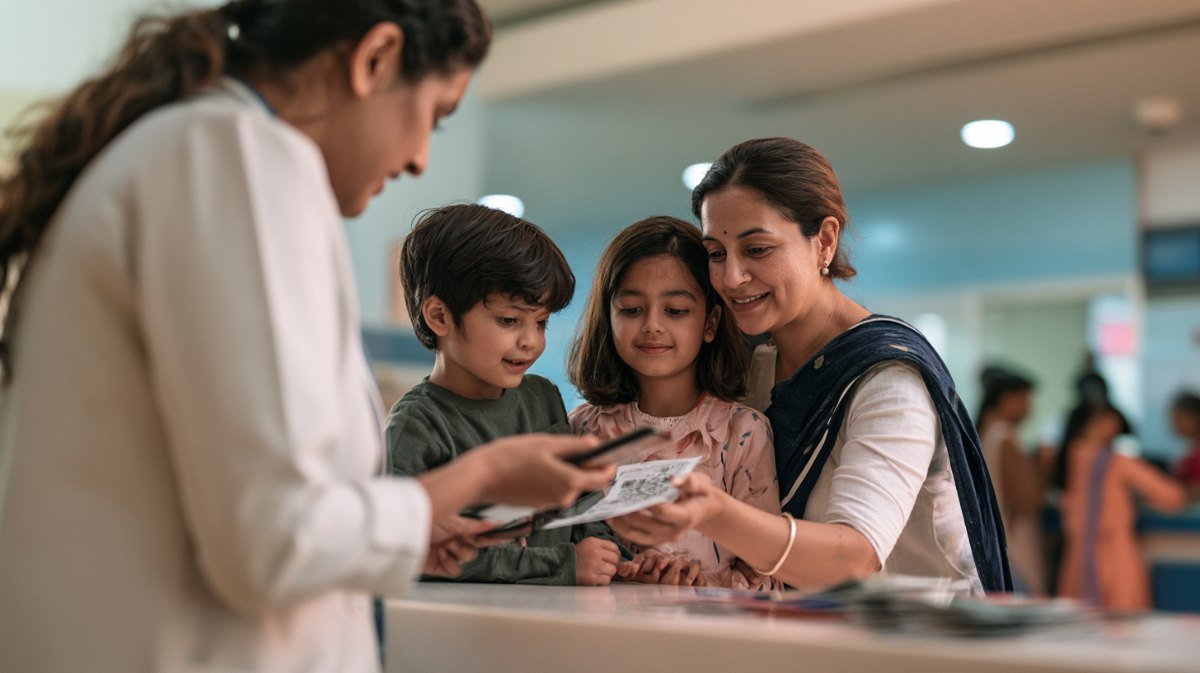
You may already have an ABHA number without remembering agreeing to one. Hospital reception desks create them routinely during registration, sometimes with no more explanation than “aapka Aadhaar de dijiye”.
That is worth understanding, because ABHA is a genuinely useful piece of infrastructure and it is also entirely voluntary — two facts that sit awkwardly together in practice.
What ABHA Actually Is
ABHA stands for Ayushman Bharat Health Account. It is the identity layer of the Ayushman Bharat Digital Mission, and it comes in two parts:
- A 14-digit ABHA number, which is the unique identifier
- An ABHA address, a readable handle that looks like
yourname@abdm, similar in form to a UPI ID
Critically, ABHA is not a medical record and it is not an insurance policy. It is a key. Your health records stay with the hospitals, labs and clinics that created them; ABHA is what lets those scattered records be found and linked when you consent to it.
Adoption is enormous — reported at around 90 crore accounts as of mid-2026 — though a fair share of those were created at registration counters rather than by people who sought one out.
It Is Voluntary, and That Matters
This is the single most important thing to know. No hospital can refuse you treatment for not having an ABHA. No one can be denied an Ayushman Bharat PM-JAY benefit for not having one.
In practice, front desks often present it as a required step, partly because facility-level adoption is measured. You are entitled to decline, and to ask that a record be created without it.
You are equally entitled to ask whether one is being created for you. If a clerk asks for your Aadhaar and an OTP arrives on your phone during hospital registration, an ABHA is very likely being generated at that moment.
Creating One Yourself
If you want one, making it yourself is better than having a desk clerk do it, because you control the details and you actually know your credentials afterwards.
- Go to abha.abdm.gov.in or install the official ABHA app.
- Choose to create using Aadhaar (the common route) or a driving licence.
- Verify with the OTP sent to your Aadhaar-linked mobile number.
- Confirm the demographic details pulled across.
- Choose your ABHA address — pick something you will remember.
- Download the card and note the 14-digit number.
It is free and takes a few minutes. As with every Aadhaar-linked service, it fails if your Aadhaar has no working mobile number attached — the fix for that is in our guide to linking a mobile number with Aadhaar.
What It Is Genuinely Good For
Scan and Share at OPD registration. The most immediately useful feature. Many hospitals display a QR code at the counter; scanning it with the ABHA app sends your details across and skips the paper registration form and the queue attached to it.
Records that follow you. Prescriptions, lab reports and discharge summaries from ABDM-registered facilities can be linked to your account, so a specialist in a different city can see the history rather than starting from your recollection.
Lab reports without chasing. Participating labs push results to your account instead of leaving you to collect a printout.
Insurance and claims. Linked records reduce the documentation scramble at claim time.
DigiLocker integration. Your ABHA card sits alongside your other documents — see our DigiLocker guide for how that section works.
The Privacy Position, Honestly
The architecture is better than critics often assume and weaker than the branding suggests.
What is designed well: records are federated, meaning they stay with the provider that created them rather than being pooled in a central government database. Access runs through a consent manager — a provider must request permission for a specific set of records, for a limited time, and you can revoke it.
What is genuinely weak: consent fatigue is real, and a consent request approved without reading is not meaningful consent. Accounts created at hospital desks are frequently created without any informed consent at all. And India still has no dedicated health data statute — this operates under the Digital Personal Data Protection Act, 2023 and the ABDM Health Data Management Policy rather than a purpose-built law.
The sensible middle position: create it deliberately if the record-linking is useful to you, review your consent history occasionally, and revoke anything you do not recognise.
If One Was Created Without You Asking
Log in at abha.abdm.gov.in using your Aadhaar-linked number, which will find any existing account. From there you can review linked facilities, check the consent log, and deactivate or delete the account if you want it gone. Deactivation suspends access; deletion is the stronger option.
While you are auditing what has been created in your name, the same logic applies to telecom — it is worth checking how many SIM cards are registered on your name. We cover India’s digital identity systems and their real-world edges at Techleez com.
Linking Records You Already Have
Creating the account is the easy part. An empty ABHA does nothing useful, and this is where most people stop.
Records reach your account in two ways. Facilities registered with ABDM can push them directly once you share your ABHA at registration — which is why the Scan and Share step matters beyond skipping a queue. And you can request linking of older records from a facility you have used before, provided that facility is ABDM-registered, through the linking section of the ABHA app.
The practical limitation is coverage. Large private hospital chains, government facilities and major diagnostic labs are broadly on board. A neighbourhood clinic, a standalone dentist or an independent physiotherapist very likely is not, and there is no way to import their records. Treat ABHA as a growing partial history rather than a complete one, and keep your own copies of anything that matters.
A Practical Way to Use It
If you decide to use ABHA, make it work rather than letting it sit dormant. Share your ABHA address at registration wherever a facility supports it, so the record attaches at the point of care instead of needing to be chased later. Check the app after lab tests rather than waiting for a printout. And before a specialist appointment in a new hospital, open your linked records so you can share the relevant history rather than reconstructing three years of treatment from memory in a ten-minute consultation.
Once a quarter, open the consent log. It takes a minute, it tells you which facilities have requested access and when, and it is the only part of the privacy architecture that depends on you actually using it.
Frequently Asked Questions
Is an ABHA card mandatory in India?
No. It is voluntary. No hospital may deny treatment and no Ayushman Bharat benefit may be refused for not having one.
Is ABHA the same as Ayushman Bharat health insurance?
No. PM-JAY is the insurance scheme. ABHA is a digital health identifier and carries no financial cover of its own.
Does ABHA cost anything?
No. Creating and using an ABHA account is free.
Can I create an ABHA without Aadhaar?
Yes, a driving licence route exists, though the Aadhaar route is the one most facilities support.
Who can see my health records?
Only those you consent to, for the period you allow. Records stay with the provider that created them rather than in a central pool, and consent can be revoked.
How do I delete my ABHA account?
Log in at abha.abdm.gov.in with your Aadhaar-linked mobile number and use the deactivate or delete option in account settings.

Fold Smith
Fold Smith is a technology journalist and the lead editor of The Techleez, an India-first publication that decodes technology, digital payments, streaming and online culture for everyday readers. From UPI and fintech explainers to OTT streaming guides, Android tips and online-safety checklists, he personally tests the apps, tools and services featured on the site before recommending them. His focus is practical, research-backed guidance that helps Indian readers make smarter digital decisions — spend less, stream better and stay safe online. When he is not writing, he is usually tracking NPCI circulars, first-day-first-show box office numbers, or the next big OTT premiere.
More from this author →