

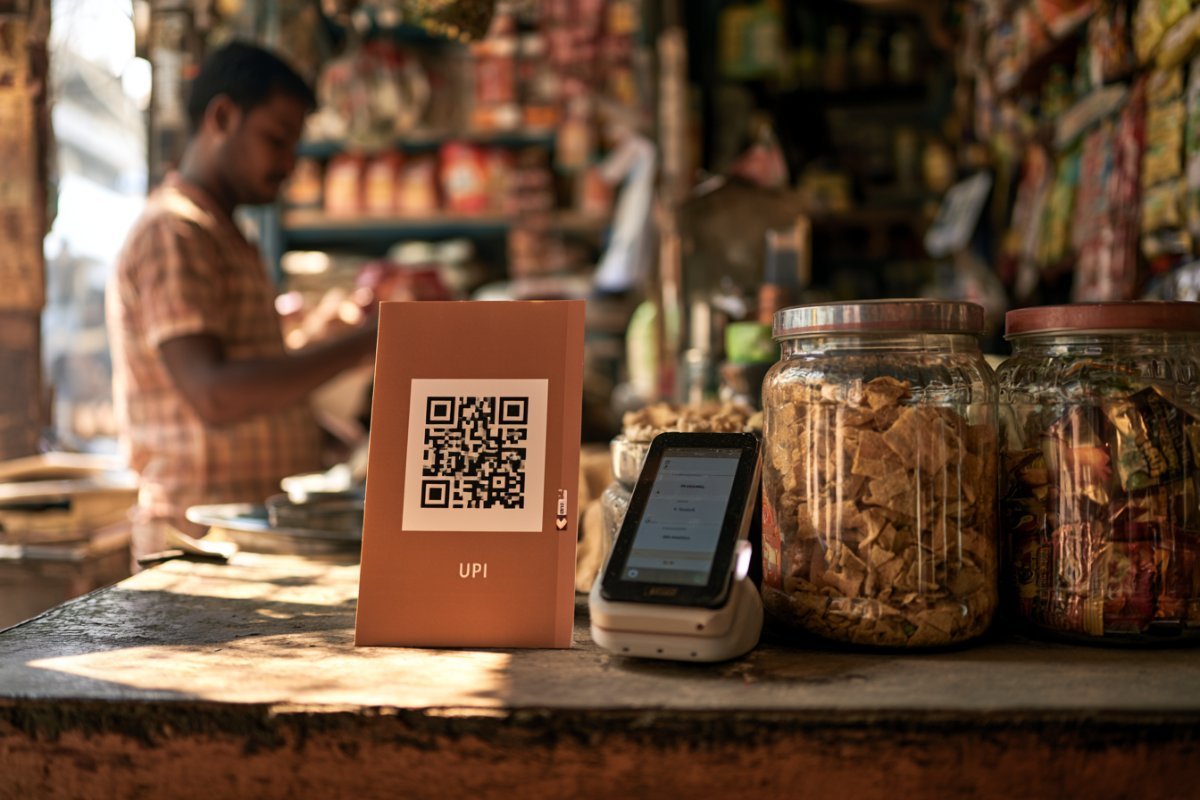
Every UPI app moves money the same way. The rails belong to NPCI, the limits come from your bank, and the transaction succeeds or fails for reasons that have nothing to do with which logo is on your screen.
So the honest question is not “which app is fastest” — they are all the same speed — but “which app’s extras are worth the trade-offs”. Here is a comparison written on that basis.
What Actually Differs Between UPI Apps
Before the comparison, it is worth being clear about what does and does not vary:
- Same: transaction speed, success rates, per-transaction limits, security model, the PIN itself. All governed by NPCI and your bank.
- Different: interface quality, extra features, rewards, ads and clutter, customer support responsiveness, and what the app does with your data.
If your payments keep failing, changing apps rarely fixes it — the cause is usually your bank’s servers or your daily limit. Our guide on failed UPI transactions covers what actually helps.
Google Pay
Best for: people who want a clean interface and nothing else.
Google Pay is the least cluttered of the major apps. No ecommerce store bolted on, no insurance upsell, no lending push. Payments, contacts, transaction history, done. Search across old transactions is genuinely good, which matters more than it sounds when you are hunting for a payment from four months ago.
Downsides: rewards are thin and gimmicky, customer support is largely automated, and there is no bill-payment depth compared with Paytm.
PhonePe
Best for: people who want payments plus insurance and investments in one place.
PhonePe has the widest merchant acceptance in smaller towns, partly because its soundbox and QR distribution went deep early. It bundles insurance, mutual funds and gold, which is convenient if you want it and noise if you do not. Bill payments are comprehensive.
Downsides: the home screen pushes financial products hard, and the app is heavier than Google Pay on older phones.
Paytm
Best for: bill payments, recharges and ticketing.
Paytm remains the strongest at the utility layer — electricity, gas, broadband, FASTag, movie and travel tickets, all handled well and with a long memory of your past bills. If you pay many bills a month, this saves real time.
Downsides: by some distance the most cluttered interface, with ads and cross-sells throughout. Also the app most affected by regulatory turbulence in recent years, which is worth factoring in if you want a low-drama primary app.
BHIM
Best for: minimalists and privacy-conscious users.
NPCI’s own app. No ads, no upsell, no ecosystem. It is plain, it is small, and it supports new UPI features early because NPCI builds them. It also tends to be the most reliable app on low-end phones and weak connections.
Downsides: the interface feels dated, rewards do not exist, and support is limited.
CRED
Best for: credit card users with good credit scores.
CRED’s UPI works fine, but the app exists for credit card bill payments and its rewards layer. If you are not paying card bills through it, there is little reason to choose it as your payment app.
Downsides: requires a decent credit score to join, and the rewards mechanics are more entertaining than valuable.
A Quick Comparison
- Cleanest interface: Google Pay, then BHIM
- Best bill payments: Paytm
- Widest small-town merchant acceptance: PhonePe
- Lightest on old phones: BHIM
- Best transaction search: Google Pay
- Most ads and upsell: Paytm, then PhonePe
- Earliest access to new UPI features: BHIM
The Advice Nobody Gives: Install Two
The single most useful thing you can do is keep two UPI apps installed, linked to two different bank accounts. When one bank’s servers go down — and they do, regularly, especially at month-end — you switch and carry on.
A sensible pairing: Google Pay on your primary salary account for everyday payments, and BHIM or PhonePe on a secondary account as the fallback. Both apps can also be configured for UPI Lite so small payments keep working even during an outage.
Things That Should Not Influence Your Choice
- Cashback offers. They are small, conditional and temporary. Nobody has meaningfully improved their finances by chasing UPI cashback.
- Claims of faster payments. Not technically possible — the rails are shared.
- Scratch cards. Entertainment, not value.
What should influence it: whether the interface annoys you, whether the app is responsive on your specific phone, and whether you actually use the extras it bundles.
Frequently Asked Questions
Can I use more than one UPI app at once?
Yes, with as many apps and linked accounts as you like. Your UPI PIN is per bank account, not per app.
Is one UPI app safer than another?
The payment security model is identical across all of them — it lives with NPCI and your bank. Differences are in app-level protections like biometric lock, which all major apps now offer.
Do UPI apps charge anything?
Not for person-to-person or standard merchant payments. Some charge for credit-card-funded or wallet-funded transactions — see our breakdown of UPI charges and fees.
Will switching apps fix my failed transactions?
Usually not. Try a different linked bank account instead.
Which app is best for a first-time user?
Google Pay or BHIM — both are simple and neither buries payments under other products.
The Bottom Line
Pick the app whose interface you find least irritating, link it to your main account, install a second app on a second account as insurance, and stop thinking about it. The app is the thin part of this system; your bank and your limits are the thick part.
For the full picture of how UPI works underneath all of them, read our complete UPI guide for 2026.

Techleez Editorial Team
The Techleez Editorial Team researches, writes and fact-checks every guide on this site. We focus on practical, India-first explainers — UPI and digital payments, government tech services like DigiLocker and Sanchar Saathi, telecom, smartphones and everyday AI tools. Every article is checked against official sources (RBI, TRAI, NPCI and service providers' own documentation) before publishing and reviewed again when rules change. Questions or corrections? Write to info@thetechleez.com — see our Editorial Policy for how we work.
More from this author →