

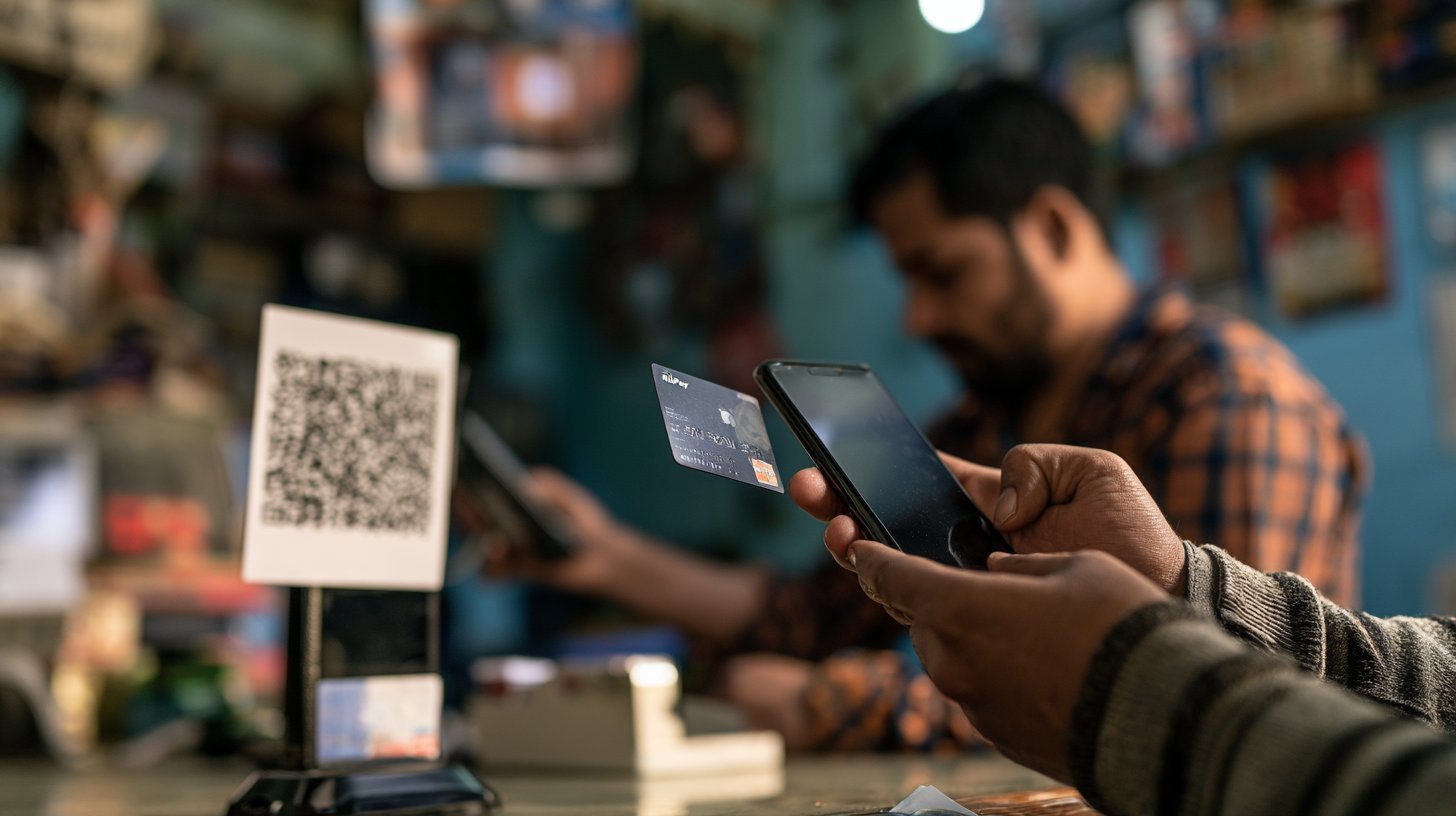
Linking a RuPay credit card to UPI lets you scan any merchant QR code and pay on credit — earning credit card rewards on everyday UPI spends, with an interest-free billing cycle. Setup takes about two minutes in Google Pay, PhonePe, Paytm or BHIM: add the card, verify with OTP, set a UPI PIN. Payments under ₹2,000 attract no merchant charges, P2P transfers are not allowed, and — the golden rule — pay the bill in full every month. Here is the complete 2026 picture.
This is arguably the biggest upgrade to everyday spending since UPI itself launched. India’s QR codes vastly outnumber card machines: crores of small merchants who never had a POS terminal can now accept credit — and you can earn 1–2% back on payments that earned nothing from a savings account. It is also the newest piece of the ecosystem we map in our complete UPI guide for 2026.
How Does a Credit Card on UPI Work?
Only RuPay credit cards can be linked to UPI (Visa and Mastercard are not part of the framework). Once linked, your card appears as a payment option alongside your bank accounts in the UPI app. You scan a QR, select the credit card, and confirm with a UPI PIN set specifically for the card. The merchant gets paid instantly; the amount lands on your credit card statement instead of leaving your bank account — so your money stays in your account earning interest until the bill due date.

How to Link a RuPay Credit Card to UPI (Step by Step)
- Update your UPI app — Google Pay, PhonePe, Paytm, BHIM and most bank apps support RuPay credit cards.
- Go to payment methods: in Google Pay, tap your profile photo → Bank accounts & cards → Add credit card; in PhonePe, Profile → Payment methods → Add RuPay credit card.
- Select your bank and card. The app fetches RuPay credit cards issued against your registered mobile number.
- Verify with the OTP sent by your card issuer.
- Set a UPI PIN for the card (using the card’s last 6 digits and expiry, or as the issuer prescribes). This PIN authorises every future payment.
From then on, every QR payment screen offers a choice: bank account or credit card. Choose per transaction.
Which Banks Offer RuPay Credit Cards in 2026?
Nearly every major issuer now has RuPay variants, including SBI Card, HDFC Bank, ICICI Bank, Axis Bank, Kotak, IDFC FIRST, IndusInd, PNB, BoB Financial and Yes Bank. Many issuers let existing Visa/Mastercard holders request a parallel RuPay variant. Fintech-issued cards (like Tata Neu HDFC RuPay) are popular precisely because of UPI linkage. When choosing, compare reward rates specifically on UPI spends — some cards give equal rewards on UPI and regular swipes, others exclude or dilute UPI categories.
Rewards, Charges and Limits
| Aspect | How It Works in 2026 |
|---|---|
| Rewards | Card’s normal reward rate applies to UPI merchant spends (issuer-specific; check exclusions like fuel/rent) |
| Charges to you | None for consumers on merchant payments; standard card interest applies if you don’t pay the bill in full |
| Merchant charges (MDR) | Payments under ₹2,000: no MDR; above ₹2,000: ~1.1–1.9% borne by the merchant |
| P2P transfers | Not allowed — credit card on UPI is merchant-payment only |
| Cash withdrawal | Not available via UPI |
| Limits | Your card’s credit limit + standard UPI transaction limits apply |
How the Float Works: A Worked Example
Say your card’s billing cycle runs from the 5th to the 4th, with the bill due on the 25th. A ₹8,000 grocery run paid by credit-card-UPI on the 6th appears on the bill generated the following 4th and is not payable until the 25th after that — up to 49 interest-free days during which the ₹8,000 stays in your savings account. Multiply that across a month of household spending and a typical family keeps ₹25,000–₹50,000 earning interest longer while also collecting card rewards. The entire benefit assumes one thing: the bill is paid in full by the due date. Carry a balance even once and interest at 3–3.5% per month is charged from the transaction date, instantly wiping out the float and the rewards.
Choosing a Card: What Actually Matters for UPI Spending
Ignore the launch offers and compare four things. Reward rate on UPI merchant spends — issuers differ widely; some pay the full rate on UPI, others cap or exclude common categories like groceries and fuel. Reward caps per cycle — a “2% cashback” card capped at ₹500 a month effectively pays much less for a family’s spending. Annual fee versus waiver threshold — most lifetime-free RuPay cards exist precisely to drive UPI adoption, so you rarely need to pay a fee. Redemption friction — statement-credit cashback beats points catalogues for most people. If you already hold a Visa or Mastercard from a bank you like, simply ask for its RuPay variant; issuers routinely add one against the same credit limit.
Smart Usage Rules (So Credit Stays a Feature, Not a Trap)
A credit card on UPI makes borrowing frictionless — which cuts both ways. Four rules keep it profitable:
- Pay the total due, every month, on time. Card interest at 36–42% annually erases years of rewards. Put the bill on UPI AutoPay — credit card bills support mandates up to ₹1 lakh without PIN.
- Track small spends weekly. ₹100 chai payments feel invisible on credit; review your card statement in-app so the bill never surprises you.
- Keep utilisation under ~30% of your limit — it protects your credit score even if you pay in full.
- Mind merchant acceptance: some small merchants decline credit-card UPI payments above ₹2,000 because of MDR. Keep your bank account as fallback.
Credit Card on UPI vs Bank Account on UPI
Use the bank account for P2P transfers, rent-like payments and anywhere credit is refused. Use the credit card for merchant spends you would make anyway — groceries, food delivery, fuel (check surcharge), shopping — to harvest rewards and float. The same safety rules apply to both: verify payee names, reject unknown collect requests, and never share your PIN. Full details in our UPI fraud safety guide. Note that credit cards on UPI currently work only for domestic merchant payments — for spending overseas, see using UPI abroad.
Troubleshooting: Card Not Linking or Payments Failing
Card not showing in the app: the mobile number on your card account must match your UPI app’s number — a mismatch is the number-one cause. Also confirm the card is RuPay (check the logo) and activated for online transactions. OTP not arriving: issuer-side delay; wait and retry rather than re-adding the card repeatedly, which can trigger a temporary block. PIN setup failing: use the exact details the issuer prescribes (usually last six digits + expiry); virtual cards sometimes need the physical card’s details after it arrives. Payment declined at a merchant: if your bank account works but the card does not, the merchant’s QR may not accept credit instruments (common with small P2P-style QRs) or the amount pushed past your available credit limit. Refunds: merchant refunds return to the card, not your bank account, and can take 5–7 days to reflect against your outstanding balance.
Frequently Asked Questions
Can I link a Visa or Mastercard credit card to UPI?
No. Only RuPay credit cards can be linked to UPI in 2026. Many issuers will give existing customers a RuPay variant on request.
Are there charges for paying via credit card on UPI?
Consumers pay nothing extra. Merchants bear MDR of roughly 1.1–1.9% on payments above ₹2,000; payments under ₹2,000 attract no MDR. Interest applies only if you don’t clear your card bill.
Do I earn rewards on UPI payments made with a RuPay credit card?
Yes — your card’s normal reward structure applies to merchant UPI spends, though issuers set category exclusions. Compare cards on their UPI reward rates specifically.
Can I send money to a friend using a credit card on UPI?
No. Credit card UPI payments are restricted to merchant transactions. P2P transfers must come from a linked bank account.
Does linking a credit card to UPI affect my credit score?
Linking itself does not. Your score responds to how you use it — high utilisation or missed payments hurt; regular spends paid in full on time help build history.
The Bottom Line
RuPay credit cards on UPI merge India’s most convenient payment rail with the rewards and float of credit — a strict upgrade for disciplined spenders. Link the card, route your regular merchant spends through it, automate full bill payment with AutoPay, and the system quietly pays you 1–2% for shopping the way you already do. Start with our complete UPI guide for 2026 to see how all the pieces — limits, AutoPay, international payments and safety — fit together.

Techleez Editorial Team
The Techleez Editorial Team researches, writes and fact-checks every guide on this site. We focus on practical, India-first explainers — UPI and digital payments, government tech services like DigiLocker and Sanchar Saathi, telecom, smartphones and everyday AI tools. Every article is checked against official sources (RBI, TRAI, NPCI and service providers' own documentation) before publishing and reviewed again when rules change. Questions or corrections? Write to info@thetechleez.com — see our Editorial Policy for how we work.
More from this author →