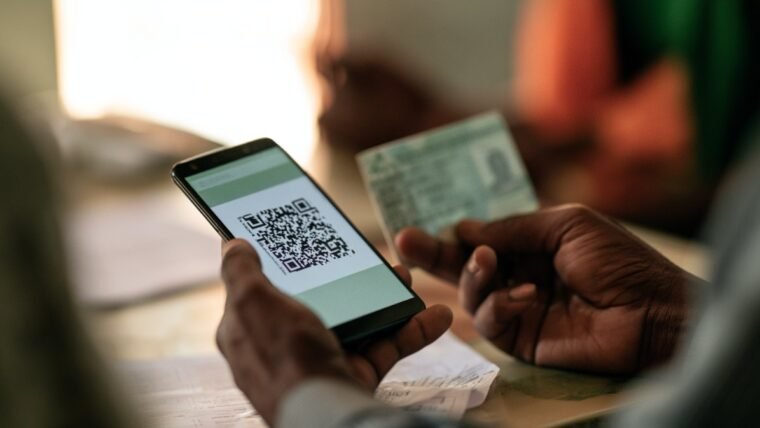
Google account recovery is not a quiz you pass or fail. It is a confidence score. Every question you answer correctly, and every contextual signal that matches, pushes that score up until Google decides you are probably the owner.
Understanding that changes how you should approach it — because the things that help most are not the answers you type, but where and how you type them.
Why Losing the Phone Number Is Recoverable
Losing access to the number on your account is common in India: you switched operators, the SIM lapsed from disuse, or the phone was stolen. It is not fatal. The phone number is one signal among several, not a gate.
What Google is weighing is the overall picture: the device you are using, whether you have signed in from it before, your location and network, your password history, your recovery email, and the account details you can supply.
Do It From the Right Place, First
This matters more than anything else, and most people get it wrong by attempting recovery on a borrowed laptop in a hurry.
- Use a device you have signed into that account on before — your old phone, your usual laptop. A recognised device is one of the strongest signals available.
- Use your usual network. Home Wi-Fi or your normal mobile data, not office Wi-Fi or a public hotspot.
- Use the browser you normally use, not incognito mode, which discards the cookies that help identify you.
- Be in your usual location. A recovery attempt from an unfamiliar city looks like exactly what an attacker would do.
Two identical attempts, one from your own phone at home and one from a cyber cafe, can produce different outcomes. If you are travelling and can wait, wait.
The Process
- Go to g.co/recover and enter your email address.
- Work through the prompts. When one cannot be completed, choose Try another way — this is the important button and it is easy to miss.
- Continue until you exhaust the options.
Routes that may appear along the way: a prompt on a signed-in Android or iOS device; a code to your recovery email; a backup code if you saved them when enabling two-step verification; an authenticator app code; a passkey on a device you still have; or the last password you remember.
Rules for Answering
Answer everything you can, even approximately. A partial answer contributes; skipping contributes nothing.
Do not guess wildly. A string of confidently wrong answers lowers your score.
Old passwords count. The most recent one you actually remember is useful even if it has since changed.
Account creation date is worth estimating — month and year is enough, and you can often narrow it from your oldest emails if you can see them anywhere.
Do not spam attempts. Repeated rapid failures work against you. If an attempt fails, wait a few hours before the next.
If Automated Recovery Fails
Google may offer a review, typically taking a few business days, with the outcome sent to your recovery email. Submit it, then leave it alone — starting fresh attempts in parallel does not help.
Meanwhile, reduce the damage. Your Google account is the recovery route for a great many other services, so change the passwords on your bank, UPI apps and social accounts to remove that dependency while you are locked out. If the lockout followed a stolen phone, block the handset across all Indian networks using our guide to blocking a stolen phone with CEIR, and if it followed a sudden loss of signal, read SIM swap fraud — an attacker may hold your number.
Set Up Recovery Properly Once You Are Back In
Spend ten minutes at myaccount.google.com → Security so this never happens again:
- Update the recovery phone number to one you actually hold. This is the step people skip after porting or changing SIMs.
- Set a recovery email at a different provider, so a single lockout does not cascade.
- Generate and save backup codes. Ten single-use codes. Print them, or write them in something physical. This is the single most reliable escape hatch.
- Add an authenticator app rather than relying on SMS, which is vulnerable to SIM swap.
- Set up a passkey on your phone or laptop for passwordless sign-in.
- Review the devices list and remove anything you no longer own.
Do the same for a parent or older relative while you are at it — they are the ones most likely to have an account tied to a number that stopped working three years ago.
What Does Not Work
There is no phone number for Google support that will restore a personal account, and any service claiming to recover accounts for a fee is a scam that will take your money and often your remaining credentials. Google will never ask for your password by email or phone.
If you receive a message claiming to be Google account support, treat it the way you would any other approach of that kind — see how to check whether a site is safe. We cover account security for Indian users at Techleez com.
Frequently Asked Questions
Can I recover a Google account without the phone number?
Yes. The number is one signal among several. A recognised device, your usual network, a recovery email and correct account details can be enough.
Where do I start account recovery?
At g.co/recover. Use “Try another way” whenever a step cannot be completed.
Why does the device I use matter?
Signing in from a device and network you have used before is one of the strongest signals Google weighs. Recovery from an unfamiliar device is far more likely to fail.
How long does a manual review take?
Usually a few business days, with the result sent to your recovery email.
Can I call Google to unlock my account?
No. There is no support line that restores personal accounts, and paid recovery services are scams.
What is the most reliable way to avoid this?
Generate backup codes and store them somewhere physical, and keep your recovery email at a different provider.

Fold Smith
Fold Smith is a technology journalist and the lead editor of The Techleez, an India-first publication that decodes technology, digital payments, streaming and online culture for everyday readers. From UPI and fintech explainers to OTT streaming guides, Android tips and online-safety checklists, he personally tests the apps, tools and services featured on the site before recommending them. His focus is practical, research-backed guidance that helps Indian readers make smarter digital decisions — spend less, stream better and stay safe online. When he is not writing, he is usually tracking NPCI circulars, first-day-first-show box office numbers, or the next big OTT premiere.
More from this author →